
Colorado’s crisp mountain air and 300+ days of sunshine make your deck one of the most valuable spaces in your home. A fireplace extends that value well past sunset and deep into fall and winter. Griffin Decks & Covers designs and installs deck fireplaces across the Front Range, built specifically for the conditions your property actually faces: high winds, dry air, extreme temperature swings, and elevation that changes how gas burns. This isn’t a catalog install. Every fireplace we build is planned around your deck’s structure, your local fire codes, and how you actually use your outdoor space.
A deck fireplace does something no patio heater or fire table can replicate: it becomes the center of gravity for your outdoor space. People gather around it. Conversations happen there. It changes how your family uses the deck on a Tuesday night in October just as much as it does during a Fourth of July party.
In Colorado, where afternoon temperatures can swing 30 degrees by evening, having a real heat source on your deck makes outdoor time practical. You get more usable months out of a space you’ve already invested in, and you’re far more likely to actually sit outside when there’s warmth waiting.
Colorado evenings cool off fast, even in summer. A fireplace keeps your deck comfortable until well after dark, turning a 6pm space into a 10pm space.
With the right setup, your deck stays functional through November and beyond. Pair a fireplace with a patio cover, and you've got a space that works in light snow.
Fire draws people in. It creates a focal point that furniture alone can't match. Your deck stops being a pass-through and becomes the place everyone wants to be.
Outdoor fireplaces rank among the most-requested features for Colorado homebuyers. A well-built fireplace adds real, appraised value, not just visual appeal.
Here's what we work with and when each option makes sense.
Gas units are the most popular choice for Colorado decks, and for good reason. They ignite instantly, produce no embers, and work during most fire ban periods. At Colorado’s elevations, burner orifices need altitude calibration to burn efficiently; this is something many general contractors skip.
Best for: Homeowners who want convenience and year-round use, especially on elevated or covered decks.
Nothing replicates the crackle and smell of a real wood fire. These units deliver maximum heat output, which matters in Colorado’s cold-air pockets at elevation. They do require more structural support and a properly designed chimney or flue to manage smoke in windy conditions.
Best for: Ground-level decks with open-air layouts, mountain properties with ample clearance, and homeowners who prioritize the real-fire experience.
Nothing replicates the crackle and smell of a real wood fire. These units deliver maximum heat output, which matters in Colorado’s cold-air pockets at elevation. They do require more structural support and a properly designed chimney or flue to manage smoke in windy conditions.
Best for: Ground-level decks with open-air layouts, mountain properties with ample clearance, and homeowners who prioritize the real-fire experience.
Fire pits create a 360-degree gathering experience that a wall-mounted fireplace can’t. When integrated into a deck, they sit within a heat-resistant surround, flush with the deck surface or slightly raised. Gas-fed fire pits are the standard for deck installations because they eliminate spark risk.
Best for: Large deck spaces designed for entertaining, ground-level decks, and homeowners who want a communal fire experience. Read our guide to fire pit integration on Colorado decks.
The material you choose for your deck fireplace surround affects how it looks, how it holds up to Colorado's weather, and how much maintenance it needs over the years. Here's what we install and how each performs in Front Range conditions.
Visual Style: Rustic, organic, high-end. Colorado moss rock and flagstone tie directly into the local landscape.
Durability: Excellent freeze-thaw resistance when properly sealed. Handles Colorado’s UV exposure without fading.
Maintenance: Seal every 2 to 3 years. Brush out mortar joints after winter to prevent moisture trapping.
Deck Compatibility: Heavy. Requires reinforced framing or a dedicated footing beneath the deck.
Visual Style: Classic, warm, and traditional. Pairs well with Craftsman and farmhouse-style Colorado homes.
Durability: Extremely long-lasting. Rated for temperature extremes well beyond Colorado’s range.
Maintenance: Low. Mortar repointing may be needed every 10 to 15 years in areas with heavy freeze exposure.
Deck Compatibility: Moderate weight. Works well on ground-level decks with standard reinforced footings.
Visual Style: Rustic, organic, high-end. Colorado moss rock and flagstone tie directly into the local landscape.
Durability: Excellent freeze-thaw resistance when properly sealed. Handles Colorado’s UV exposure without fading.
Maintenance: Seal every 2 to 3 years. Brush out mortar joints after winter to prevent moisture trapping.
Deck Compatibility: Heavy. Requires reinforced framing or a dedicated footing beneath the deck.
Visual Style: Decorative, precise, customizable. Great for accent panels and hearth surfaces.
Durability: Porcelain tile rated for outdoor use handles Colorado weather. Ceramic tile does not. Selection matters here.
Maintenance: Clean grout lines seasonally. Avoid porous grout in freeze zones; use epoxy-based alternatives.
Deck Compatibility: Lightweight. Can be applied over concrete backer boards without major structural changes.
Visual Style: Contemporary or rustic industrial. Corten steel develops a weathered patina that fits mountain settings.
Durability: Steel and iron hold up well in dry Colorado air. Less corrosion risk here than in coastal climates.
Maintenance: Minimal for powder-coated or Corten steel. Wrought iron needs periodic rust treatment.
Deck Compatibility: Light to moderate weight. Often used for fire pit surrounds, screens, and decorative framing.
Installing a fire feature on a deck in Colorado involves more layers of compliance than most homeowners expect. Here's what you should know before planning your project. Griffin Decks & Covers handles the research and paperwork, but understanding the landscape helps you make better decisions.
Most Colorado municipalities require a building permit for any permanent fire feature on a deck. Gas fireplaces typically also need a separate mechanical permit for the gas line. Permit requirements vary by municipality, so what applies in Golden may differ from what's required in Highlands Ranch or Evergreen.
Many Front Range communities have HOA covenants that regulate outdoor fire features. Some restrict wood-burning units entirely. Others require architectural review board approval before construction begins. We help you compile the documentation your HOA needs, including material specs, site plans, and elevation drawings.
Colorado's Front Range is one of the windiest corridors in the country. Fireplaces and fire pits need wind screens, directional shielding, or sheltered placement to function safely. Open flames in exposed locations create both a safety hazard and a frustrating user experience. We design around your property's specific wind patterns.
At elevations above 6,000 feet, open burning restrictions are common and enforced aggressively during dry seasons. Gas and electric fireplaces typically remain legal during Stage 1 and Stage 2 fire bans. Wood-burning units may be prohibited. Altitude also affects combustion efficiency for gas burners, which require adjusted orifice sizing.
Fire features must maintain minimum distances from combustible railings, overhead structures, property lines, and neighboring buildings. These distances vary by fire type and municipality. We factor all required clearances into the design phase so there are no surprises during inspection.
Note: Specific regulations vary by municipality, county, and HOA. Griffin Decks & Covers provides guidance based on current codes but recommends confirming requirements with your local building department.
We start with a conversation about how you use your deck, what you want the fireplace to do (primary heat source? ambient feature? cooking?), and your budget range. This happens before anyone picks up a tape measure.
Based on your goals, we develop a design concept that includes fireplace type, placement, materials, and integration with your existing deck layout. You'll see drawings and material samples before anything is finalized.
We visit your property to assess deck structure, framing capacity, gas line access, electrical availability, wind exposure, and clearance distances. If your deck needs reinforcement to support the new load, we identify that here.
You choose your surround materials, finish details, and any accessories (mantels, screens, hearth surfaces). We provide samples rated for outdoor Colorado conditions. No guessing about what holds up and what doesn't.
We research your local permit requirements, prepare the necessary documentation, and submit applications on your behalf. If your HOA requires architectural review, we supply the drawings and specs they need.
Our crew handles structural prep, gas or electrical rough-in, fireplace unit placement, surround construction, and finish work. We coordinate with licensed plumbers and electricians when gas or electrical work is involved.
Once the install is complete, we walk through the entire project with you. You'll learn how to operate your fireplace, what maintenance it needs, and what to watch for over the first season. We don't leave until you're fully comfortable with the finished product.
Colorado's weather is harder on outdoor fire features than most homeowners realize. The combination of intense UV, sudden temperature drops, heavy snow loads, and persistent wind creates a maintenance profile that's different from what you'd find in milder climates. Here's what to stay on top of.
Heavy, wet snow sitting on a fireplace surround drives moisture into mortar joints and stone pores. Use a fitted, breathable cover when the fireplace isn't in use during extended snow periods. After major storms, brush off accumulation before it refreezes.
Colorado's Front Range regularly sees daytime highs above freezing and overnight lows well below it, sometimes in the same 12-hour window. This freeze-thaw cycling is the number one cause of cracked mortar and spalling stone. Annual sealant application is the simplest line of defense.
Chinook winds and Front Range gusts can push debris into gas burners and ignition systems. If your fireplace is in an exposed location, install a protective wind screen and check burner ports for blockage after high-wind events.
Gas fireplaces: clean burner and logs twice per year (spring and fall). Wood-burning units: remove ash after each use, deep-clean the firebox and flue before each season. For all types, wipe down surround materials monthly during active use.
Schedule a professional inspection each spring. This should cover gas connections, ignition systems, masonry integrity, and any structural settling. Catching a small crack in April prevents a major repair by December.
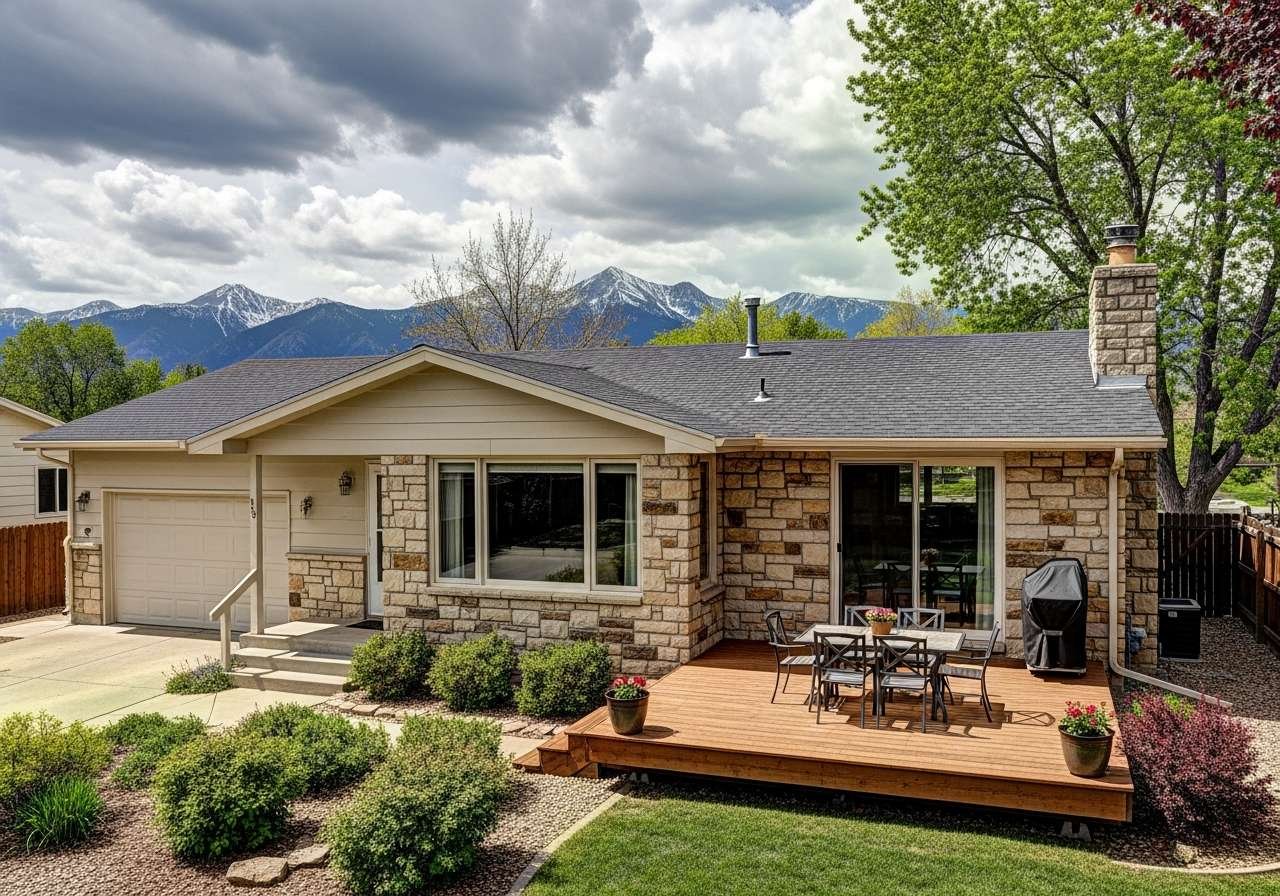
See how deck fireplaces look in real Colorado homes. These installations span gas, wood-burning, and fire pit designs across properties on the Front Range.
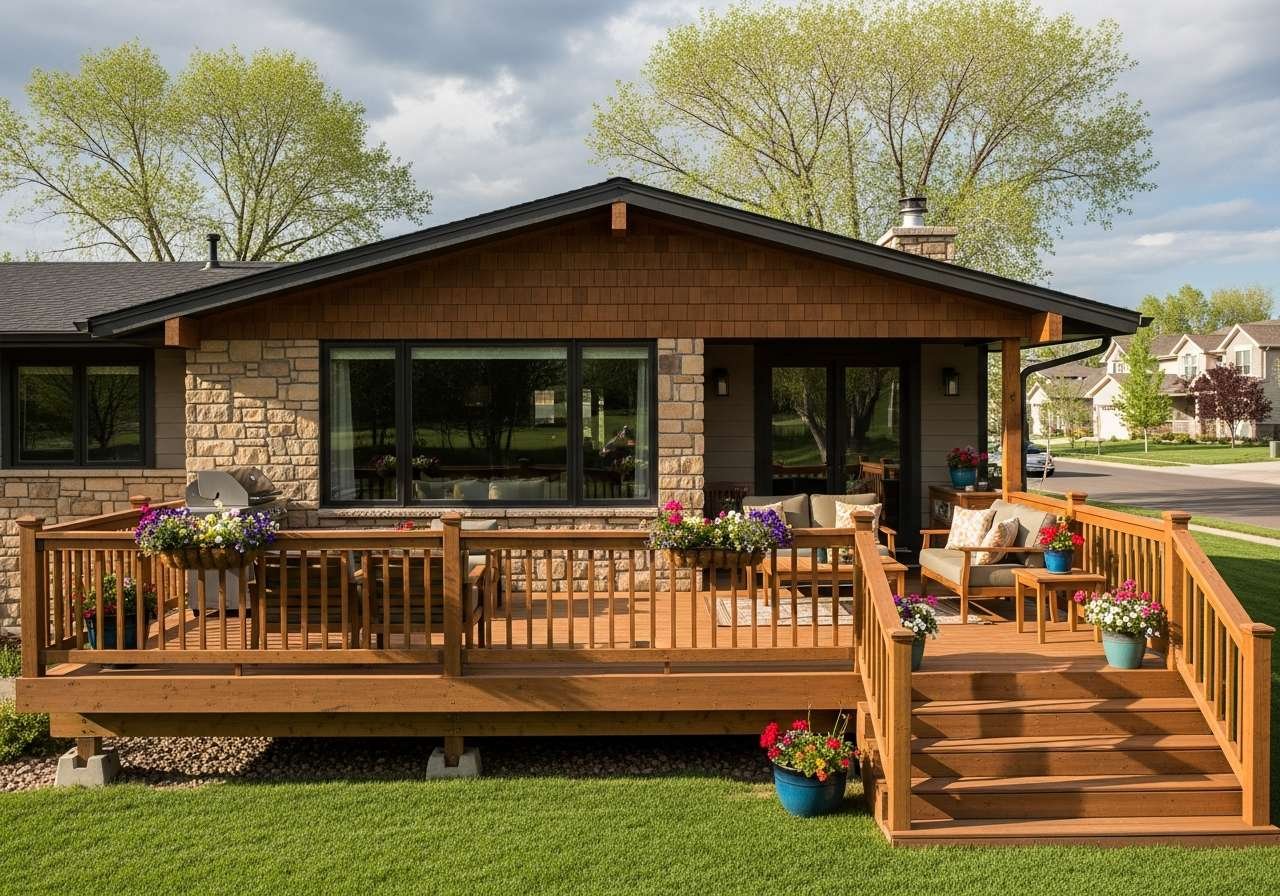
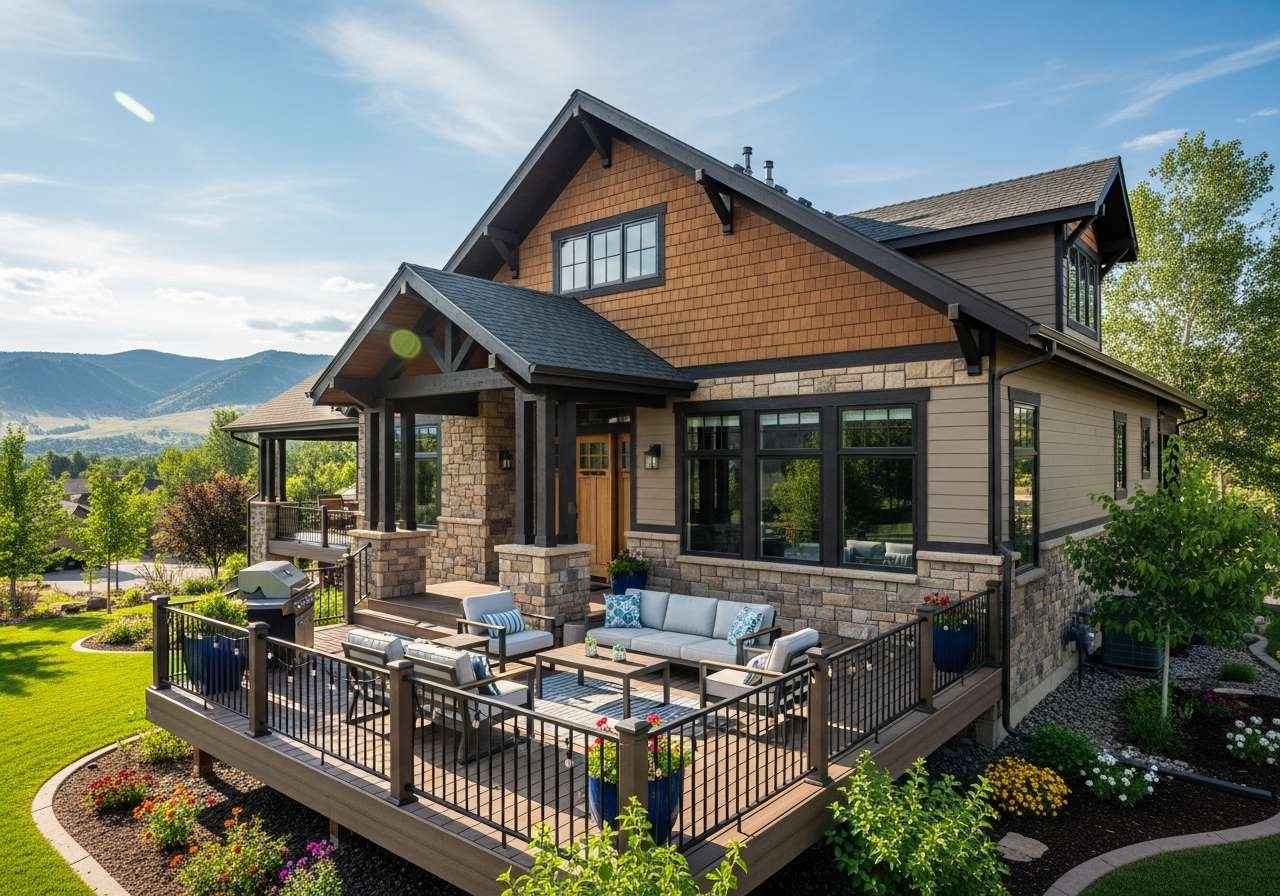
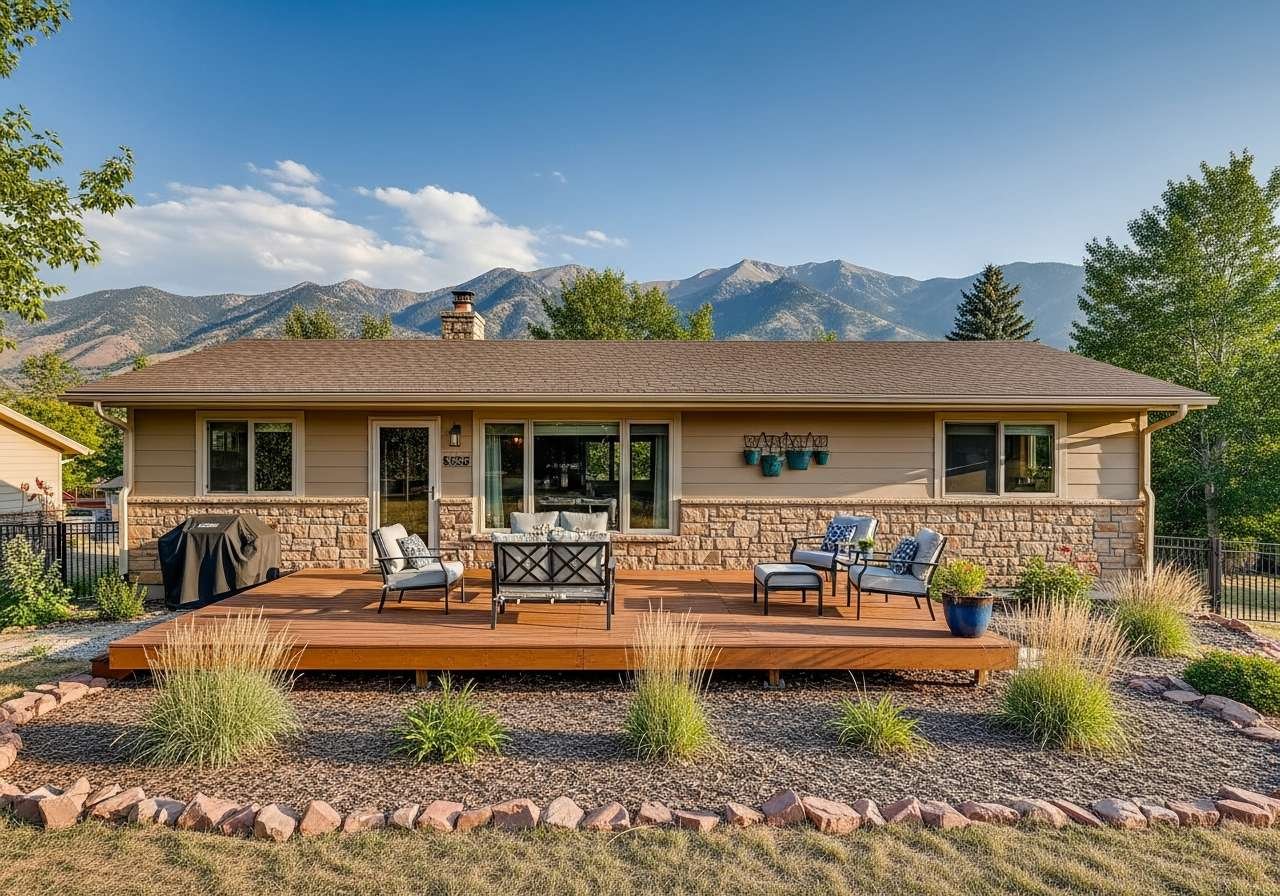
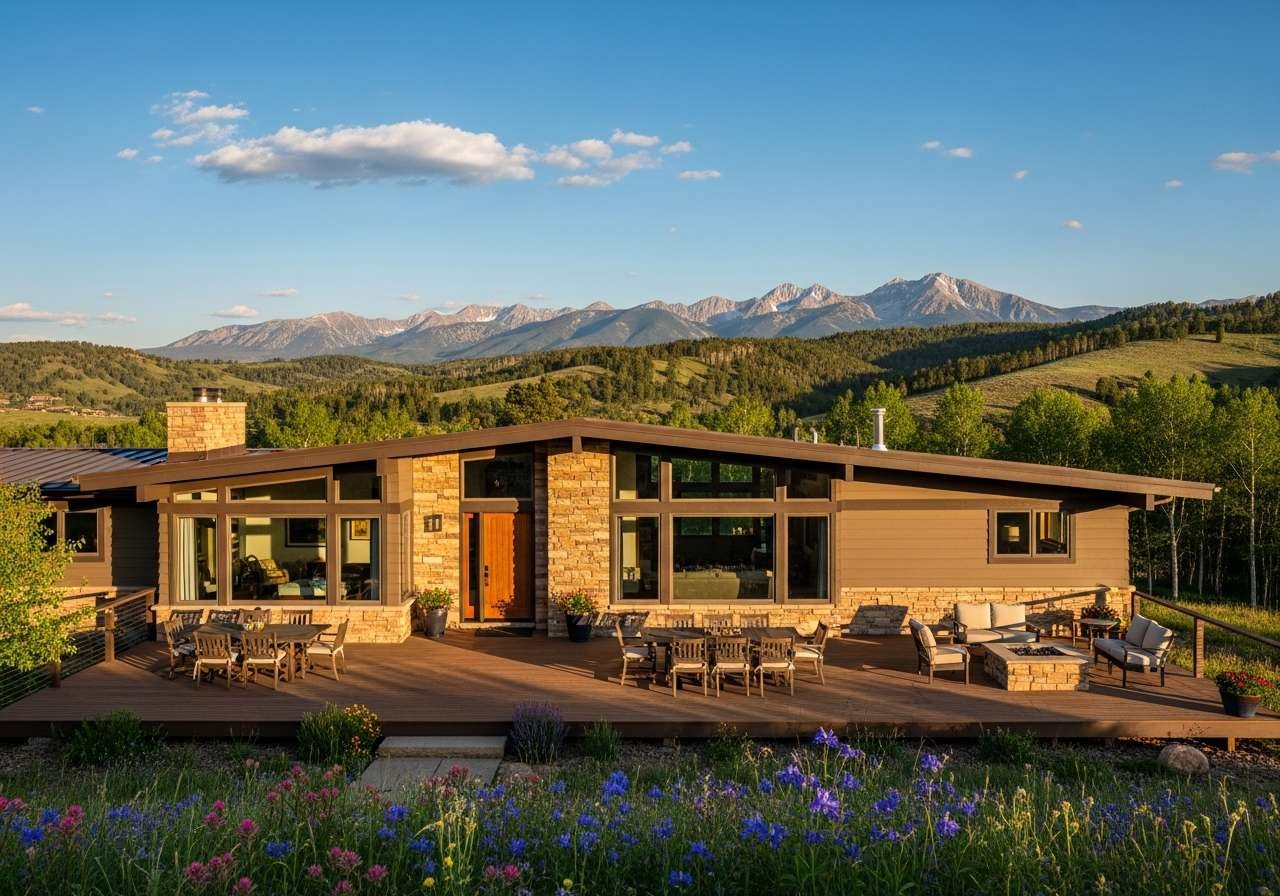
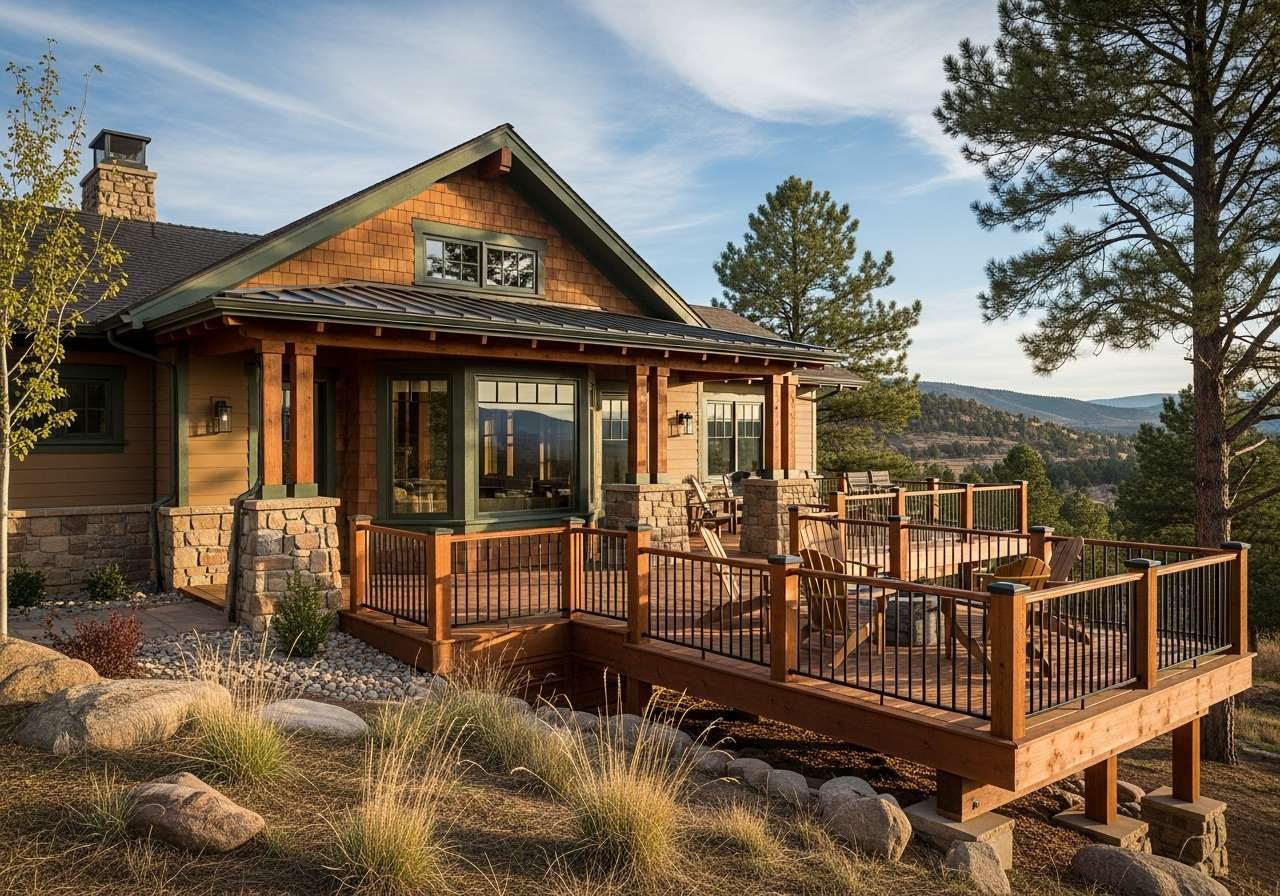
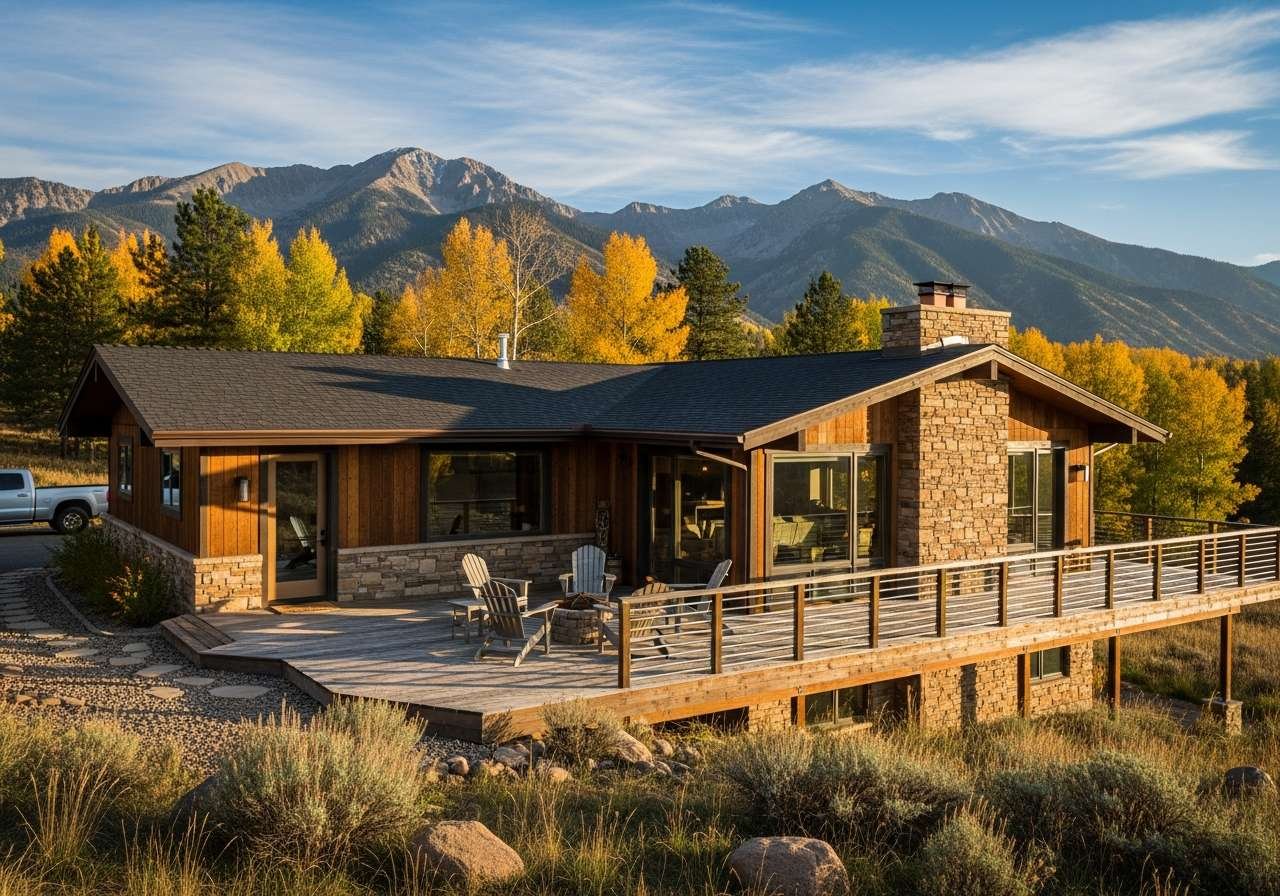
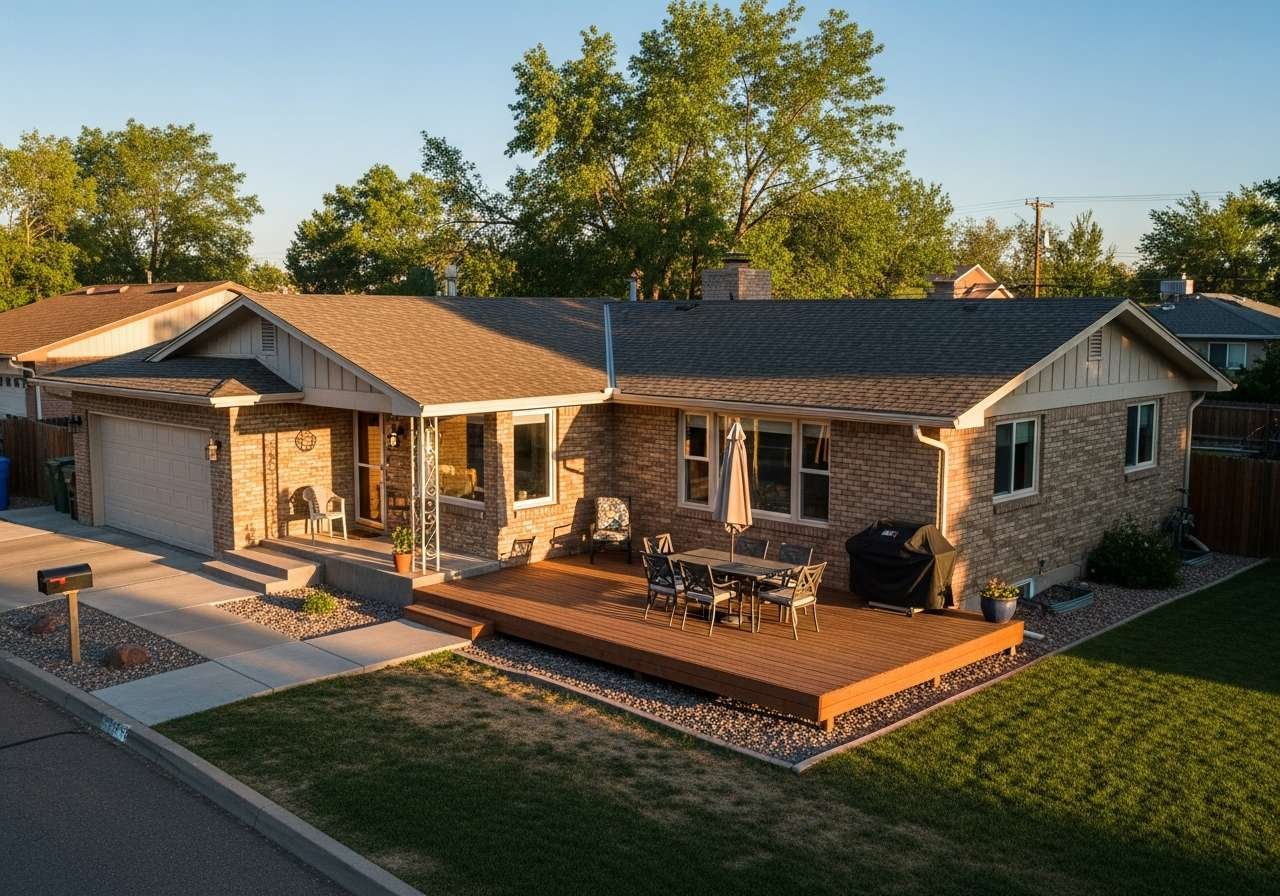
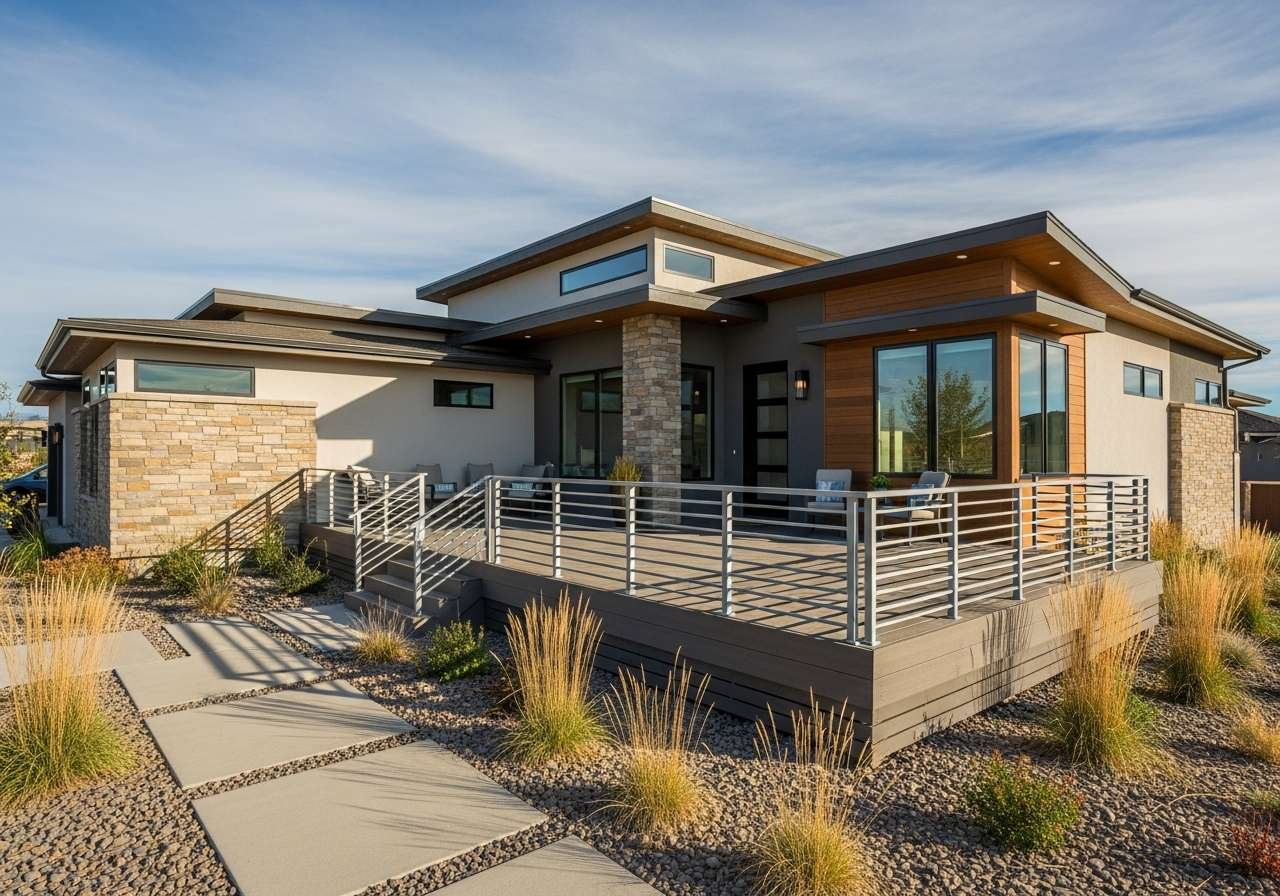
We design and install deck fireplaces across Colorado’s Front Range corridor and into the foothills. Our team knows the building codes, climate conditions, and soil characteristics specific to each community.
A deck fireplace is often part of a bigger picture. Here’s what else Griffin Decks & Covers brings to the table.
Ground-up deck construction in composite, hardwood, and cedar. Designed around Colorado's snow loads, soil conditions, and your property's specific layout.
Solid-roof and louvered patio cover systems that protect your deck (and your fireplace) from rain, snow, and direct sun. A natural pairing with any fire feature.
Open-air shade structures that define outdoor rooms without closing them in. Pergolas work especially well to frame a fireplace seating area with overhead interest.
LED step lights, post cap lights, and ambient string lighting that complement your fireplace's glow and keep your deck safe after dark.
Cable, glass, and composite railing systems that maintain sightlines while meeting code. Railing design near a fireplace affects both safety clearance and aesthetics.
Structural repairs, board replacement, and framing reinforcement. If your existing deck needs work before a fireplace can be added, we handle that first.
Answers to the questions Colorado homeowners ask most about deck fireplace projects.
Most Colorado municipalities require permits for fireplace or fire feature installations on decks, especially those involving gas lines or masonry. Requirements vary by city and county, so Griffin Decks & Covers handles permit research and submission as part of every project. We’ll identify exactly what your jurisdiction requires during the design phase.
Gas fireplaces with altitude-adjusted burners perform reliably across Colorado’s Front Range elevations (5,000 to 9,000+ feet). At higher elevations, reduced oxygen density means standard gas orifices won’t burn efficiently, so proper calibration is essential. Wood-burning options also work well but require proper draft design for thinner air. Electric fireplaces are unaffected by altitude entirely.
Yes, in many cases a fireplace or fire feature can be retrofitted onto an existing deck. The structure must support the additional weight, and proper clearances from railings, walls, and overhead covers must be maintained. A site evaluation will confirm what’s possible with your current framing. If reinforcement is needed, we can handle that as part of the project scope.
Timelines range from one to three weeks depending on the type of fireplace, materials selected, and permit processing times. A gas fire pit on an existing deck is on the shorter end. A full masonry fireplace with stone surround, gas line installation, and structural modifications will take closer to three weeks or more. Weather delays can extend timelines during Colorado’s spring and fall seasons.
Gas and electric fireplaces are typically exempt from open-fire bans since they don’t produce embers or sparks. This is one of the main reasons gas units are so popular on Colorado decks. Wood-burning fireplaces and open fire pits are usually restricted during Stage 1 and Stage 2 fire bans. Always check your county’s current fire restrictions before lighting any fire feature.
Costs vary based on the type of fireplace, material choices, gas line requirements, and any structural modifications needed. A simple gas fire pit integration has a lower entry point, while a full masonry fireplace with custom stone surround represents a larger investment. Rather than publishing a range that may not reflect your specific project, we provide detailed, transparent estimates during your free consultation.
Outdoor fireplaces are consistently ranked among the top features Colorado homebuyers look for. In a market where outdoor living space is a major selling point, a well-built fireplace adds both functional square footage and visual impact. Real estate professionals on the Front Range regularly cite outdoor fire features as a strong return-on-investment improvement.
Colorado’s freeze-thaw cycles demand regular inspection of masonry joints and gas connections each spring. Use a fitted, breathable cover during extended periods of non-use in heavy snow. Gas burners should be cleaned and inspected before each burning season. Wood-burning units require chimney or flue inspection and ash removal. We provide a detailed maintenance schedule specific to your installation at project completion.
Yes, with proper ventilation and clearance planning. Vented gas fireplaces and certain electric units work well beneath patio covers. The structure needs adequate airflow and fire-rated materials at specific clearance distances dictated by the manufacturer and local code. We design these integrations with all safety requirements factored in from the start.
Absolutely. Fire pit integration is one of our most requested features during new deck builds. We install gas-fed fire pits with heat-resistant surrounds directly into deck surfaces or on adjacent patio areas connected to the deck. Each installation includes proper ventilation, drainage, and fire-safe clearances specific to your deck’s construction and local codes.
Start with a free consultation. We’ll visit your property, assess your deck’s structure, discuss your vision, and give you a clear, honest estimate. No pressure, no vague pricing, and no surprises. Griffin Decks & Covers has been building outdoor living spaces across Colorado’s Front Range for homeowners who expect their investment to hold up, look right, and actually get used.
Or call us directly to talk through your project.