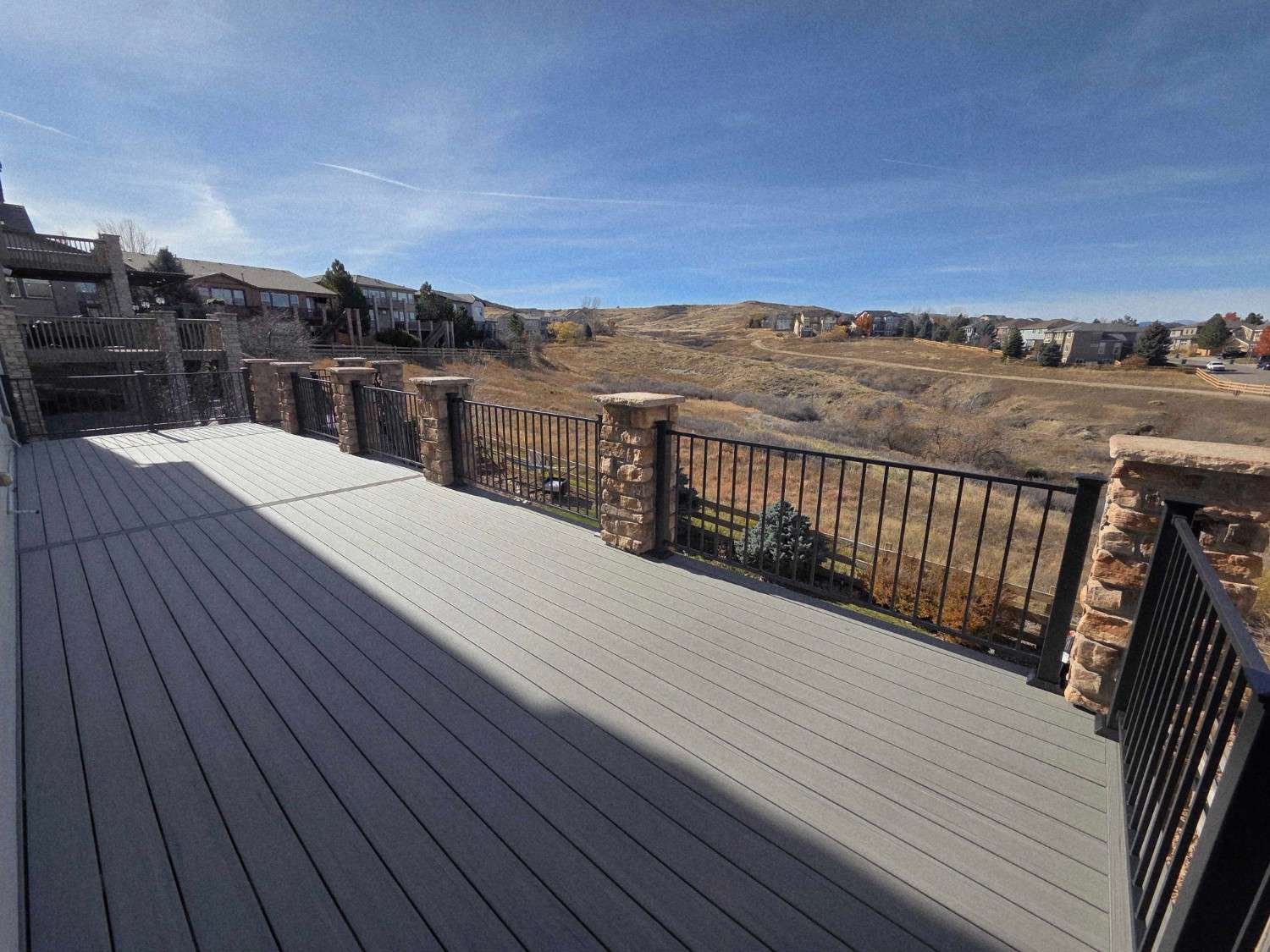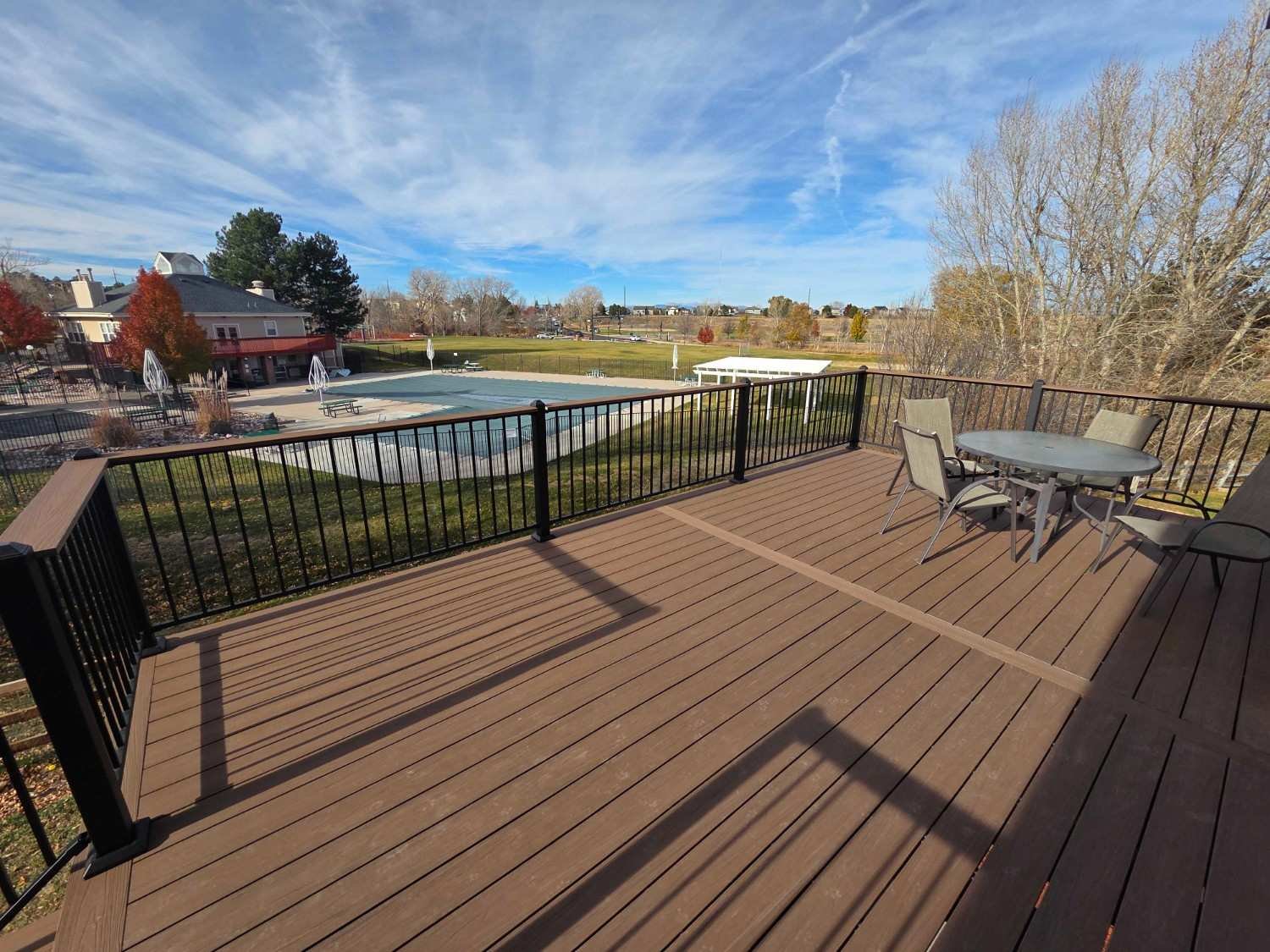
Colorado’s climate puts structures to the test. With intense UV at altitude, freeze-thaw cycles that crack weak foundations, and wind gusts that barrel down the Front Range, a fence wall here needs to do more than look good. It needs to stand its ground. Griffin Decks & Covers designs and installs residential fence walls across Colorado, built specifically for the conditions your property faces every season.
Most fence contractors install fences. We build fence walls that account for Colorado’s unique combination of altitude, soil movement, and severe weather. That distinction matters when you’re investing in a structure meant to last decades, not just a few seasons.
Our team works across the Front Range and into the foothills, so we understand how conditions shift between a flat lot in Highlands Ranch and a sloped property in Evergreen. Our material recommendations, footing depths, and design choices reflect those real differences rather than a one-size-fits-all approach.
We Install in Colorado Each property has different demands. Here's how we match fence wall types to what your site actually requires.
If your backyard faces a busy street or a neighbor’s second-story windows, a privacy fence wall creates a genuine barrier, not just a visual one. Solid masonry, concrete, or tall composite panels block sightlines and reduce noise. These are especially popular in tighter suburban lots across communities like Highlands Ranch and Parker where homes sit close together. A well-placed privacy wall turns an underused yard into a space that actually feels private.
Homes and properties near open space often benefit from fence walls that provide added security and privacy. These builds typically use reinforced concrete or steel-integrated masonry at heights of 6 to 8 feet. Anti-climb features, integrated lighting mounts, and controlled-access gate openings can all be incorporated. For property managers overseeing multi-unit complexes, security walls double as perimeter definition that meets insurance and liability standards.
Not every fence wall serves a strictly functional purpose. Decorative walls define outdoor living zones, create visual boundaries between a front entry and street traffic, or add character to a driveway approach. Natural stone, textured concrete block, and stucco-finished walls each offer a distinctive look. In Colorado’s foothills, we often work with local stone to tie a fence wall into the surrounding landscape rather than looking like an afterthought.
Properties along highways, rail lines, or busy corridors deal with constant noise. Sound barrier fence walls, typically 8 feet or higher, use dense materials like precast concrete or solid masonry to absorb and deflect sound waves. The reduction isn’t complete, but homeowners near I-25 or C-470 who’ve installed these walls consistently report a noticeable drop in traffic noise inside their homes and backyards.
Choosing the right material for Colorado means weighing appearance, climate performance, maintenance, and budget. Here's an honest comparison.
Limitations
Limitations
Offers less privacy unless combined with panels, can dent on impact
Fence wall regulations in Colorado aren’t uniform. What’s allowed in Littleton may differ from what Castle Rock or Golden permits. Here are the main factors to account for.
Height limits: Most municipalities cap front yard fences at 4 feet and side/rear fences at 6 feet without a variance. Walls exceeding these heights typically require additional permitting and may need engineered drawings.
Setbacks and property lines: Fence walls must be placed within your property boundary. Survey stakes aren’t always accurate years after initial development, so we recommend confirming property lines before any posts go in the ground.
HOA rules: Many Colorado subdivisions have architectural review committees that approve or reject fence wall plans based on material, color, height, and style. We’ve worked with dozens of HOAs along the Front Range and handle the submission process for you.
Wind load considerations: Colorado’s high-wind zones, particularly along the I-25 corridor and near the foothills, may trigger additional structural requirements. Local building departments sometimes require wind-load calculations for solid fence walls over 6 feet.
Note: Requirements vary by municipality. We coordinate with your local building department as part of every project to confirm what’s needed before construction begins.
We start with a conversation about what you need: privacy, security, aesthetics, or a combination. You'll share your goals, and we'll discuss realistic options for your property and budget.
Our team visits your property to assess soil conditions, grade changes, existing structures, access points, and any underground utilities. This step prevents costly surprises once the work begins.
Based on the site evaluation and your preferences, we recommend materials that fit Colorado's conditions and your aesthetic. You'll see samples and understand the trade-offs before committing.
We finalize the layout, dimensions, heights, gate placements, and any decorative features. If your property has slopes or unique terrain, the design accounts for that specifically.
Griffin handles permit applications and, if needed, HOA architectural review submissions. We don't start building until everything is approved and documented.
Footings are poured, posts are set, and panels or blocks go up according to the approved plan. We manage the full build, keep the site clean, and communicate progress throughout.
Once the fence wall is complete, we walk the project with you to check every detail. Any adjustments are handled immediately, and we'll share specific maintenance guidance for your materials.
Even durable fence walls benefit from a little attention. Colorado’s climate accelerates wear in ways that lower-elevation, milder regions simply don’t experience.
Snow and ice: Don’t let heavy snow pile against the base of wood or composite fence walls. Moisture trapped against the material encourages rot and staining. A quick shovel pass after heavy storms goes a long way.
UV exposure: At Colorado’s elevation, UV radiation is significantly stronger than at sea level. Wood fades and dries out faster; vinyl can become brittle. UV-resistant sealants on wood walls and periodic inspection of vinyl panels will extend their life.
Wind stress: After major wind events, especially the Chinook-style gusts along the Front Range, check fence walls for leaning posts, loosened panels, or cracked mortar. Small issues caught early stay small.
Moisture and drainage: Colorado’s clay-heavy soils expand and contract with moisture changes. Make sure grading directs water away from the wall base. Standing water against footings can cause shifting over time.
Seasonal inspection schedule: Walk your fence line twice a year, once in spring after winter stress and again in late fall before the first freeze. Look for cracks, rust, loose hardware, or soil erosion near posts. A 20-minute inspection can prevent repairs that cost thousands.
Cleaning: A garden hose handles most surface dirt. For mold or algae (common on north-facing surfaces), a mild detergent and soft brush work well. Avoid pressure washing stone walls at close range since it can dislodge mortar.
We serve homeowners throughout the Front Range and beyond. Our fence wall crews know these communities because we’ve been building in them for years.
Don’t see your area? Contact us to check availability. We regularly take on projects throughout Colorado’s Front Range and mountain communities.
A fence wall often connects to a larger vision for your outdoor space. Explore our other services.
A new fence wall pairs naturally with a deck project. We design decks that work with your property's layout, slope, and the wall placement itself, so everything feels intentional.
Colorado's afternoon thunderstorms don't have to chase you inside. A patio cover extends the usable hours of your outdoor space, especially when combined with a walled perimeter.
Pergolas create a focal point that transforms a fenced-in yard into an actual gathering space. Covered or open, they give your outdoor area structure and shade where it matters.
Low-voltage LED lighting along fence walls and decks adds evening ambiance and practical visibility. We integrate lighting into the structure itself, keeping the look clean rather than improvised.
Safety and aesthetics go hand in hand here. Our railing installations use materials that complement both your deck and any adjacent fence walls for a cohesive property appearance.
If your existing deck has seen better years, then it is a smart time to address structural issues. We can repair, refinish, or replace sections alongside your wall build, saving you time and mobilization costs.
Answers to the questions Colorado property owners ask most about fence wall installation.
Most residential fence wall projects take between 1 and 3 weeks depending on size, material, and permit timelines. Weather delays are common during Colorado’s spring and late fall months, so we build buffer time into every schedule.
Most Colorado municipalities require permits for fence walls above a certain height, typically 4 feet in front yards and 6 feet in side or rear yards. Requirements vary by city and county, so it’s important to check with your local building department. We handle permit applications as part of the project.
Yes, when properly engineered. Colorado’s Front Range can see wind gusts exceeding 100 mph, so fence walls here need deep footings, reinforced posts, and designs that account for wind load. Solid masonry and reinforced concrete walls perform especially well. We factor local wind patterns into every design.
A fence wall is a solid or semi-solid structure typically made of masonry, concrete, stone, or composite materials. It offers more privacy, better sound reduction, and significantly longer lifespan than a standard picket, chain-link, or panel fence. The trade-off is higher upfront cost and longer installation time, but fence walls generally require far less maintenance over their lifetime.
In most cases, yes. A well-built fence wall adds curb appeal, privacy, and security, all of which buyers in Colorado’s competitive real estate market value. Stone and concrete fence walls tend to offer the strongest return on investment because of their longevity and visual impact. The exact value depends on your neighborhood and the quality of the installation.
Colorado’s frost line sits between 30 and 36 inches in most Front Range areas. Footings typically need to extend below this depth to prevent frost heaving, which can shift or crack a wall. Higher-elevation communities like Evergreen may require even deeper footings. Your local building code will specify the exact requirement for your area.
Absolutely. Stepped and racked designs work well on Colorado’s hilly terrain, which is common in foothills communities and mountain neighborhoods. The approach depends on the grade percentage, soil composition, and your material choice. A site evaluation helps us determine the best method for your specific slope and drainage situation.
Many Colorado HOAs restrict fence wall height, materials, colors, and even placement on the lot. Some require architectural review board approval weeks before construction can start. We’ve navigated HOA processes in communities across Highlands Ranch, Parker, Castle Rock, and beyond, so we know what to prepare and how to get your plans approved without unnecessary delays.
Late spring through early fall gives the most reliable conditions for installation. Concrete and mortar work, in particular, cures best in moderate temperatures. That said, precast concrete and vinyl installations can happen in cooler weather. A smart approach: plan and design over winter, submit permits early, and break ground as soon as spring conditions allow.
Property boundary disputes are more common than you’d think. We always recommend a current survey before installation to confirm your property lines. If a neighbor has concerns, it’s best to resolve them before construction. Colorado law generally allows you to build a fence wall on your property up to the permitted height, but good communication with neighbors prevents friction and potential legal complications.
Non-combustible fence walls made of concrete, stone, or metal can serve as a component of your defensible space plan, especially in wildfire-prone areas near Evergreen and other mountain communities. They won’t replace vegetation management or proper home hardening, but a masonry wall between your home and approaching ground fire adds a meaningful barrier.
Tell us about your property, your goals, and your timeline. We’ll put together a plan that makes sense for your Colorado home, and provide a detailed estimate at no cost.