
Spiral Staircase Decks: A Space-Saving Way to Add a Second Level

See how an outdoor spiral staircase adds second-level deck access on a tight Front Range lot, built to hold up to Colorado snow, ice.
Patio Cover Ideas to Stretch Your Colorado Outdoor Season
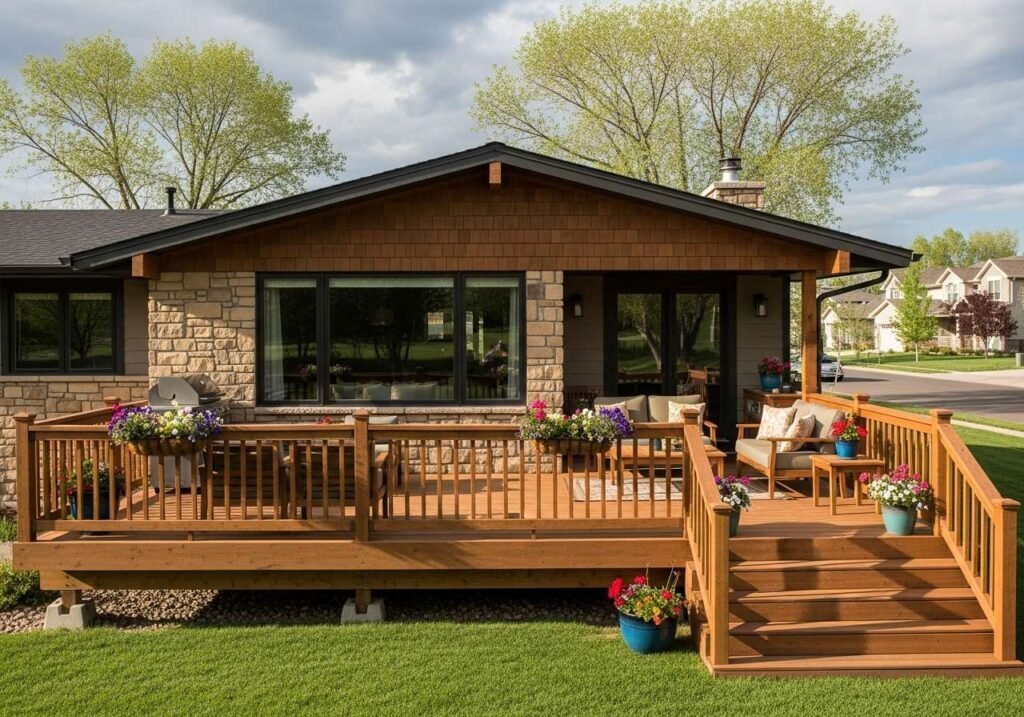
Patio cover ideas for southern Denver and Castle Rock homes: solid roofs, lean-to designs, pergolas, and under-deck spaces built for Colorado sun and snow.
Designing Durable Decks for Colorado’s Front Range: Code Compliance, Materials, and Climate Resilience
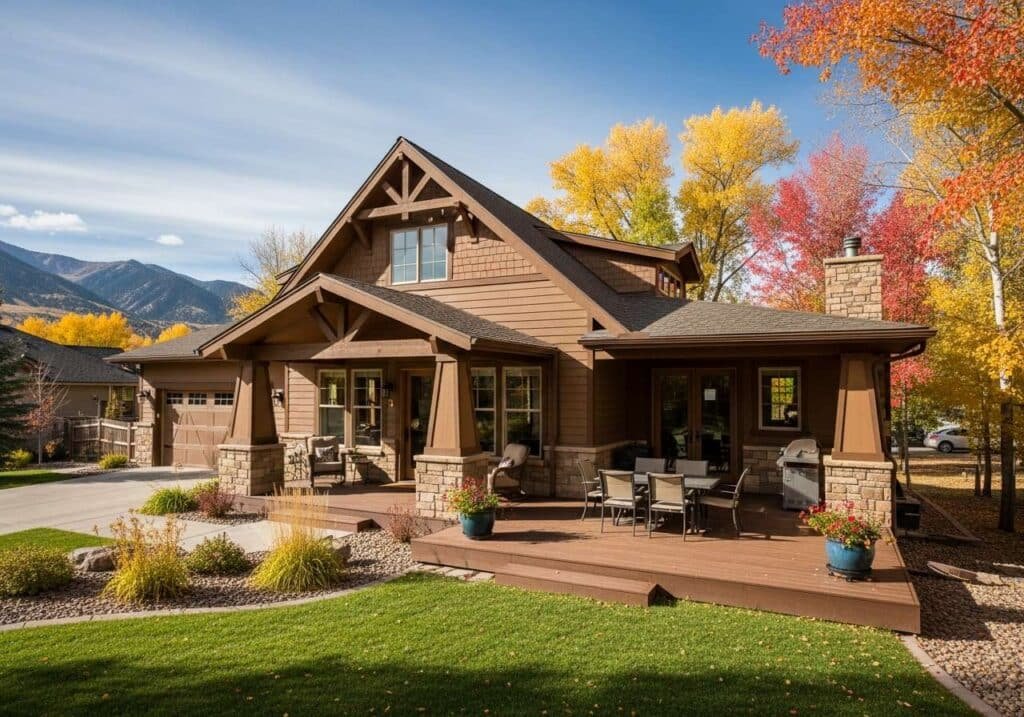
A practical, engineering-minded guide for Colorado Front Range homeowners and project managers that synthesizes local building-code constraints, microclimate freeze–thaw cycles, and material science into a decision framework for long-lasting decks. The article will map permit and inspection touchpoints across Littleton, Centennial, Parker, Highlands Ranch, Aurora, Golden and Castle Rock; compare lifecycle costs and failure modes of pressure‑treated lumber, cedar, tropical hardwoods, and capped composites under repeated freeze/thaw and de‑icing exposure; provide specific flashing, ledger-attachment and drainage details that reduce rot and inspection failures; propose a risk‑based footing and snow‑load design checklist, seasonal maintenance schedule, and cost-timeline matrix; and close with an owner-facing decision tree that weighs upfront cost, warranty, expected service life, and repairability—enabling homeowners to choose a compliant, climate‑resilient decking strategy tailored to the Front Range.
A Homeowner’s Guide to Specifying Deck Systems for Colorado’s Front Range: Codes, Loads & Materials Explained

A practical, technical guide for homeowners and project managers on specifying deck systems that survive the Front Range climate—covering how elevation-driven snow and wind loads dictate joist spans, ledger attachment, and connection detailing; why flashing, drainage, and ledger-to-house interfaces are the primary failure points; and how material selection (pressure-treated, cedar, hardwoods, capped-composite, and PVC) interacts with UV degradation, freeze–thaw cycling, and thermal expansion to determine long-term performance and life-cycle cost. The article will walk through local permit triggers and inspection thresholds used across Littleton, Centennial, Parker, Highlands Ranch, Golden, Aurora, and Castle Rock, present a simple load-calculation estimator for homeowners, specify fastener and railing anchorage choices to reduce liability, and offer an evidence-based decision matrix balancing upfront price, maintenance interval, warranty transferability, project timeline, and HOA approval strategies—plus the critical questions to ask during a free professional inspection from a licensed contractor.
Front Range Deck Decisions: Repair or Replace? Your Step-by-Step Guide

This article will present a rigorous, practical decision framework for Colorado Front Range homeowners deciding whether to repair or replace a deck. Combining a forensic inspection checklist (ledger connections, joist rot, fastener corrosion, flashing integrity, railing posts, stair geometry) with local climate stressors (freeze–thaw cycles, heavy snow loads, high UV and hail), the guide shows how to quantify remaining service life, estimate phased repair versus full-replacement lifecycle costs, and prioritize interventions by risk and value. It will translate building-code and permitting constraints common in Littleton, Centennial, Highlands Ranch and Castle Rock into decision triggers, identify material and attachment strategies (stainless fasteners, ledger flashing, ventilation/drainage, composite vs cedar trade-offs) that extend service life, and provide procurement best practices—contract clauses, warranty language, and inspection milestones—to minimize liability and schedule risk. Practical worksheets and an example cost-benefit matrix will equip readers to get a reliable, safety-first quote from a licensed Front Range contractor and to understand when a free professional inspection is warranted.
Designing Resilient Decks for Colorado’s Front Range: What Every Homeowner Needs to Know

This article will provide a field-ready, practitioner-focused blueprint for designing, replacing, and permitting decks on Colorado’s Front Range—integrating structural engineering (snow-load and live-load calculations), freeze–thaw resilient detailing (ledger flashing, thermal movement gaps, and fastener corrosion resistance), and jurisdiction-specific permitting strategies across Littleton, Centennial, Parker, Highlands Ranch, Golden, Aurora and Castle Rock. It will move beyond materials lists to present decision frameworks: lifecycle cost modeling comparing pressure-treated wood, capped composites, and aluminum; a risk-based inspection rubric that identifies replacement triggers (ledger rot, joist deflection, railing instability); and a phased construction plan that minimizes homeowner disruption while ensuring code-compliant inspections and insurance documentation. The guide will also include sample permit submittal checklists, engineered span tables adjusted for Front Range snow loads, and contractor QA checkpoints—so homeowners and specifiers can make evidence-based choices, avoid common failure modes, and prioritize timely repairs and replacements.
Lifecycle Cost Analysis and Climate-Ready Deck Design for Colorado Front Range Homes

This article will present a decision-focused, quantitative framework for homeowners weighing repair versus full replacement of decks on Colorado’s Front Range. It combines lifecycle-cost modeling (including initial construction, scheduled maintenance, and probabilistic replacement cycles) with climate-adaptive design criteria—snow-load engineering, freeze–thaw detailing, UV degradation, ember/wildfire exposure, and high-altitude corrosion of fasteners—and local regulatory constraints (Front Range building codes, ledger flashing requirements, permitting timelines, and common HOA restrictions). Readers will get an actionable decision matrix that translates NPV-style comparisons into simple homeowner thresholds (years-to-payback, acceptable maintenance burden, and risk-adjusted safety limits), plus prioritized retrofit strategies (ledger replacement, joist reinforcement, low-combustible materials, and drainage/flashings) tailored to Littleton, Centennial, Highlands Ranch, Parker, Aurora, and Castle Rock microclimates. The guide will include sample cost tables, inspection checklist items a homeowner should request during Griffin Decks & Covers’ free professional inspection, real local case studies, and recommended procurement/financing approaches to minimize disruption while maximizing long-term value and safety.
Front Range Deck Replacement Playbook: Codes, Materials, and Lifecycle Planning

A practical, contractor-grade playbook for licensed decking professionals and discerning homeowners on Colorado’s Front Range that translates local climatic constraints, municipal permitting variations (Littleton, Centennial, Parker, Highlands Ranch, Golden, Aurora, Castle Rock), and structural requirements into repeatable design, procurement, and construction decisions. The article will present a multicriteria decision framework—combining life‑cycle cost analysis, snow-load and UV degradation modelling, corrosion and freeze–thaw risk assessment, and HOA/wildfire-adjacency considerations—to compare cedar, pressure-treated lumber, capped composite, PVC, and aluminum across longevity, maintenance burden, and upfront cost. It will also include technical guidance on ledger flashing, joist spacing, fastener selection, engineered connections, railing and stair integration, and inspection protocols; a sample permit checklist, seasonally optimized project timeline for the Front Range, sample contract clauses and warranty structures to allocate risk, and a homeowner-facing checklist for vetting licensed contractors and free professional inspections. The aim is a granular, actionable guide that helps professionals design decks that maximize safety, compliance, and client ROI while giving homeowners the evaluative tools to select trustworthy, locally experienced installers.
Permits, Snow Loads, and Materials: A Homeowner’s Guide to Deck Replacement on Colorado’s Front Range

A practical, step‑by‑step framework for homeowners and contractors planning a full deck replacement in Littleton, Centennial, Parker, Highlands Ranch, Aurora, Golden, or Castle Rock: this guide zeroes in on site‑specific decision points—ledger inspection and flashing retrofit options, calculating design snow loads and frost‑depth footings for Front Range soils, choosing between pressure‑treated framing vs. composite or hardwood finishes based on lifecycle cost and thermal expansion behaviors, and selecting fasteners and hidden‑clip systems rated for Colorado cycles. It maps the permit pathway and code differences local jurisdictions enforce, outlines when a repair becomes a replacement (structural rot, joist spacing failure, ledger compromise), estimates realistic seasonal timelines and cost buckets, and prescribes risk‑reducing contracts, inspection touchpoints, and warranty/maintenance strategies that preserve resale value. The article will equip readers to evaluate contractor bids analytically, spot critical line‑item omissions (flashing, structural ledger retrofit, engineered beam specs), and schedule a free professional inspection from Griffin Decks & Covers to get an accurate, permit‑ready plan tailored to the Front Range climate.
A Homeowner’s Guide: Should You Repair or Replace Your Front Range Deck?

Present a decision-making framework tailored to Colorado’s Front Range that integrates on-site structural triage, non‑destructive inspection metrics, and life‑cycle cost analysis to determine when a deck should be repaired, partially rebuilt, or fully replaced. The guide will define measurable thresholds — remaining service life (RSL), safety‑hazard index (ledger/joist corrosion, fastener withdrawal, rot extent), and expected maintenance burden — and translate them into clear homeowner actions by factoring local variables (snow-load and freeze–thaw cycles, UV exposure, municipal permit triggers such as decks over 30 inches, and updated IRC flashing/ledger requirements). It will map material‑specific outcomes (pressure‑treated lumber, capped composite, aluminum) to long‑term costs, warranties, and resale value, quantify permit timelines and soft costs, and include an operational checklist for contractors to produce an evidence‑based repair vs. replace recommendation—culminating in a reproducible scorecard homeowners can use to compare quotes, financing options, and the safety/risk tradeoffs of deferring work versus replacing now.