
Choosing the Right Decking System for Colorado’s Front Range: Structural Options, Fastener Strategies, and Code-Smart Design

A decision-focused blueprint for homeowners and remodelers that compares decking substructures (ledger-tied vs. free‑standing, post‑and‑beam vs. concentrated‑beam, and cantilevered solutions) through the lens of Front Range climate and code constraints. The guide will analyze performance trade-offs—span limits, joist spacing, beam sizing, and lateral-load connectors—alongside fastener and connector strategies (stainless vs. hot‑dip galvanized, hidden clip compatibility, screw vs. face‑fastening) with corrosion-risk modeling for high‑UV, freeze‑thaw and de‑icing salt exposure. It will unpack footing and foundation choices (conventional piers, deeper frost footings, helical piles), ledger detail and flashing durability, and methods to mitigate differential settlement and moisture intrusion beneath decks. The article will present an evidence‑based decision matrix that weighs upfront cost, lifecycle maintenance, safety (ledger failure and uplift mitigation), and aesthetic outcomes, plus a permit-and‑inspection checklist tailored to Colorado Front Range municipalities—giving homeowners a prioritized, technically grounded path to choose the optimal decking system for longevity, code compliance, and lowest long‑term risk.
Your Guide to Selecting the Best Decking System for the Colorado Front Range
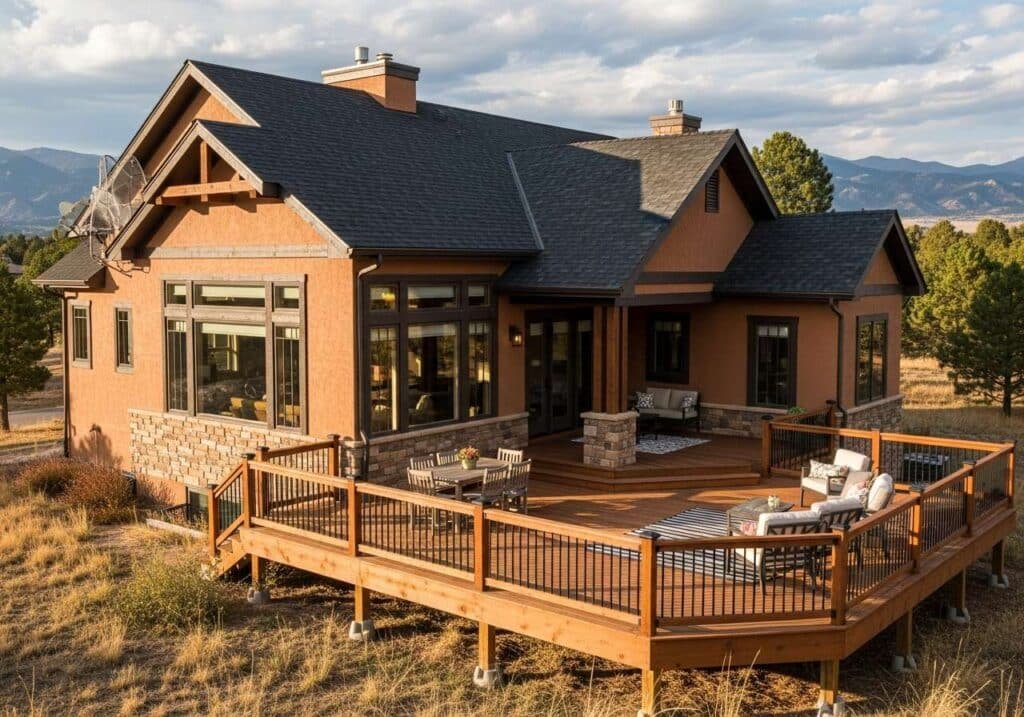
This article will present a decision-focused, performance-driven framework for selecting a residential decking system tailored to the Colorado Front Range—comparing ledger-attached, freestanding, cantilevered and floating substructures; timber, engineered-lumber and steel framing options; and fastener strategies from stainless hidden clips to structural face-screws and galvanized connectors. It will evaluate each approach against local performance drivers—freeze/thaw cycles, snow drift loads, solar UV, differential moisture movement, and frost-depth footing requirements—and translate those technical trade-offs into a homeowner’s matrix that weighs upfront cost, long-term maintenance, durability, and code compliance for towns like Littleton, Centennial, Parker and Highlands Ranch. The piece will conclude with sample spec recommendations, a prioritized risk checklist for inspections, and clear next-step guidance (including a free professional inspection) to help homeowners choose the optimal substructure and fastening system for their site, budget and lifecycle goals.
Optimizing Colorado Deck Substructures: Ledger, Cantilever, and Fastener Choices Explained

This article will deliver a design-led, evidence-based guide to choosing and detailing deck substructures for Colorado Front Range homes—comparing ledger-attached, freestanding (pier-on-grade), and cantilevered systems through rigorous analysis of load paths, serviceability limits (joist spans, cantilever ratios), and lifecycle durability. It will translate local drivers—snow-load, wind uplift, frost-depth variability, and semi-arid freeze–thaw cycles—into specific footing depths, ledger connection details, and bracing requirements, and quantify how material choices (pressure-treated lumber, composite/PVC decking on wood or aluminum framing) change those requirements. A focused section will evaluate fastener and connector strategies—stainless-steel grades vs hot-dip galvanizing, coated screw vs hidden-clip systems, and corrosion mechanisms unique to Front Range microclimates—then map those choices to maintenance schedules and total cost-of-ownership. The piece will conclude with clear decision rules, practical detailing checklists, and inspection triggers tailored to communities from Littleton to Castle Rock so homeowners and specifiers can confidently select the most durable, code-compliant decking system for their site; a free professional inspection offer will be presented as the final, risk-reducing step.
Designing a Long-Lasting Deck Substructure in the Colorado Front Range: Materials, Fasteners, and Local Codes

This article will present a systems-level decision framework for selecting and detailing deck substructures that reliably perform in the Colorado Front Range climate—weighing attached versus freestanding framing, beam-and-joist layouts, footing strategies, and corrosion-resistant fastening systems. It will analyze tradeoffs using measurable performance metrics (service life, maintenance intervals, failure modes, and life-cycle cost) and translate them into practical assemblies: ledger-fastened decks with flashed and through-bolted connections, engineered ledger alternatives, freestanding post-and-beam solutions, and fully floating composite systems. Technical sections will compare fastener metallurgy (hot-dip galvanized vs. stainless steel grades 304/316, polymer-coated options), hidden versus face-fastening strategies for wood and composite boards, and detailing to avoid galvanic corrosion and accommodate thermal expansion at altitude. The guide will integrate local considerations—frost-depth and footing practices, municipal ledger attachment requirements across Front Range jurisdictions (Littleton, Centennial, Parker, Highlands Ranch, Golden, Aurora, Castle Rock), accelerated UV/desiccation effects, and drainage/ventilation strategies to limit moisture-induced rot—plus a prioritized inspection checklist (including non-destructive moisture testing and ledger inspection protocols), retrofit prescriptions for aging decks, and three recommended build-up assemblies matched to common homeowner scenarios and budgets. The result will be a graduate-level, actionable roadmap that allows contractors and informed homeowners to choose a decking system that minimizes risk and total ownership cost while meeting local code and site-specific environmental stresses.
Designing Long-Lasting Deck Substructures for the Colorado Front Range: Systems, Fasteners, and Snow Loads

A focused, technical guide that evaluates deck substructure strategies—ledger-attached, freestanding post-and-beam, cantilevered joists, pedestal-supported rooftop/floating decks—and the fastener and connection systems that govern long-term performance in the Colorado Front Range (Littleton, Centennial, Parker, Highlands Ranch, Castle Rock). The article will synthesize structural load-path analysis (live, snow, wind), serviceability limits (deflection criteria), and frost/soil mitigation options (deep footings, helical piers, adjustable pedestals) with material science considerations—comparative life‑cycle costs and failure modes for treated lumber, composites, aluminum, and steel; thermal expansion differentials; and galvanic corrosion risks that drive stainless‑steel grade and coating choices. It will also translate code and permitting implications for local jurisdictions, practical detailing to prevent ledger failure (flashing, through‑bolts vs lag fasteners), hidden‑fastener vs face‑screw tradeoffs, drainage and ventilation strategies to reduce rot, and retrofit pathways for existing homes—culminating in a decision framework homeowners can use to choose the optimal decking system that balances durability, maintainability, aesthetics, and total cost over a 20–30 year horizon.
A Homeowner’s Guide to Code-Compliant Deck Framing, Fasteners, and Substructures in Colorado’s Front Range

This article will provide a decision-oriented, engineering-informed playbook for homeowners and remodelers on selecting and detailing deck framing systems and fastener strategies tailored to the Colorado Front Range. It will contrast ledger-attached versus free‑standing deck approaches, wood versus steel framing, and common substructure layouts (post-and-beam, cantilevered joists, and pier foundations), then evaluate fastener metallurgy, corrosion risk from de‑icing salts, and concealed‑clip systems for composite boards. The piece will translate load-path theory into practical rules—frost‑depth footing design, snow‑load and live‑load considerations, lateral‑load connection methods (DCA‑6 and IRC references), and engineered cantilever limits—while offering a lifecycle cost-and-maintenance matrix that quantifies tradeoffs between upfront build cost, longevity, and inspection/repair frequency. Finally, it will include a localized permit checklist, a short homeowner inspection protocol for common failure modes (ledger rot, connector corrosion, post settlement), and two annotated case studies from Front Range soil and climate conditions to ground recommendations in real-world outcomes.
Discover the Top 2023 Decking Innovations Transforming Colorado Outdoor Spaces

In 2023, decking systems have evolved significantly, introducing advanced features that enhance both functionality and aesthetics. This article will delve into the latest innovations, such as customizable privacy screens and enhanced traction step treads, which are transforming outdoor living spaces. These developments not only offer improved safety and design flexibility but also cater to the growing demand for sustainable and smart outdoor solutions. Homeowners in Colorado’s Front Range can benefit from understanding these trends, as they provide opportunities to personalize their decks while ensuring durability and compliance with local climate challenges. The article will explore the complexities of integrating these new technologies and materials, addressing common questions about installation, maintenance, and cost-effectiveness.
Engineering Decking Systems for Colorado’s Freeze-Thaw Challenges: What Every Homeowner Should Know

Colorado’s Front Range presents a uniquely challenging environment for decking systems, thanks to dramatic freeze-thaw cycles, shifting soils, and intense UV exposure at high altitude. This article will explore the nuanced engineering and material selection strategies needed to ensure deck structures remain safe and durable in these conditions. We’ll examine why standard, off-the-shelf designs often fail locally and what technical adaptations—such as specialized footings, moisture barriers, fastener choices, and advanced composite materials—can mitigate cracking, warping, and premature aging. Homeowners will learn what to ask during planning, how to spot red flags in existing decks, and why these local adaptations are essential for both safety and long-term investment.
How Deck Drainage Systems Safeguard Your Colorado Deck Investment

Deck drainage systems are a critical yet often overlooked component of durable deck construction in Colorado’s Front Range. Given the region’s unique weather—sudden storms, freeze-thaw cycles, and lingering snow—poor drainage can quickly lead to rot, mold, and structural failures, even with modern composite materials. This article will explore the mechanics, installation challenges, and material options for under-deck drainage, as well as common mistakes homeowners make when attempting DIY solutions. It will also cover new innovations in water management and how local code requirements shape the choice of drainage systems. Homeowners will gain insight into how professional-grade drainage protects investments, extends deck life, and prevents costly repairs unique to the climate in Littleton, Castle Rock, Highlands Ranch, and surrounding areas.
How Advanced Deck Drainage Systems Safeguard Colorado Front Range Homes

Exploring the role of integrated drainage and waterproofing technologies in modern decking systems, this article will demystify the nuances of water management beneath deck boards—a critical but overlooked issue for Colorado homeowners. With frequent freeze-thaw cycles, heavy spring snowmelt, and sudden downpours common from Littleton to Castle Rock, inadequate drainage can lead to costly structural rot, shifting joists, or dangerous ice buildup. We’ll examine the latest composite and underdeck solutions, compare installation methods, and answer tough questions about local regulations, long-term maintenance, and insurance impacts. This guide provides actionable insights for those ready to invest in a deck built to last through Colorado’s unpredictable weather.