
Why does lighting your deck matter more than you think? Picture last night’s dark step, the harsh flood that blinds but doesn’t help, and string lights that look cute yet leave stairs risky. Now imagine a warm, layered glow—safe edges, cozy dining, calm paths. We go past pretty photos into lumen ranges, spacing, wiring, and controls you can sketch in 60 minutes. Code-safe, dark-sky mindful, future-proof. Start with our printable checklist—or book a quick consult.
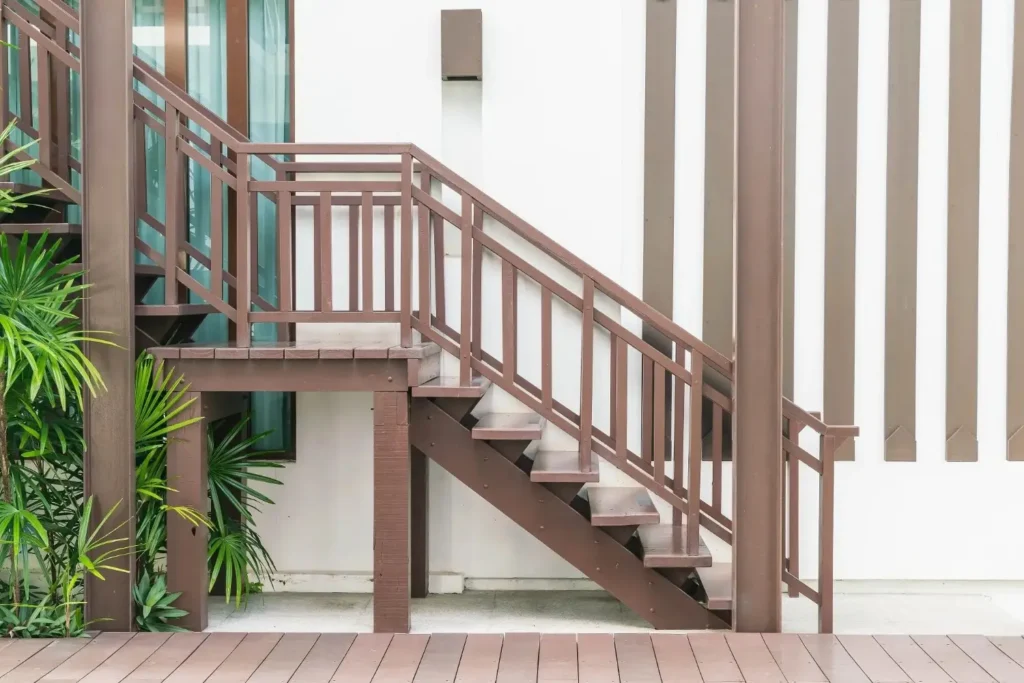
We’ve designed and built hundreds of lit decks across the U.S.—this is our field‑tested playbook.
Since this is our field‑tested playbook, here’s why lighting matters now: safety first. Stairs, edges, and level changes need gentle, uniform light so feet know where to land. Warm, layered LEDs extend your deck from one hour after sunset to all evening, without bug‑magnet glare. You’ll also boost perceived value; finished night photos sell. For urgency, look at CDC (U.S. Centers for Disease Control) data: falls are a leading home injury cause. Good lighting reduces that risk.
We’ve watched wobbly descents disappear when riser lights mark every tread and landings glow softly. Dining feels calmer with 2700–3000K (color temperature measured in Kelvin) and dimming for conversation after the meal. Security improves too: shielded path light deters wandering without blasting the neighbor’s fence. If you like data, CPSC (U.S. Consumer Product Safety Commission) and CDC reports consistently rank falls among top home injuries. Translation: thoughtful light prevents accidents and invites you outside longer.
You flip the switch and a single flood screams across the boards. Steps vanish into patchy darkness while a hard white glare hits your eyes. Solar stakes glow at dusk then fade by halftime of the game. The cheap transformer hums like a fridge, cords loop under chairs, and someone toes a cable. You squint, you tiptoe, you give up. That’s not ambiance. It’s stress.
Then there are the “light islands”—bright puddles under a fixture with eerie black gaps between. Rails catch harsh hotspots so guests shield their eyes instead of seeing faces. Corners stay ink-dark, so you stop using the grill side or that quiet chair by the planter. The space shrinks after sunset. Your deck looks great at noon and invisible by nine.
The culprit isn’t the dark; it’s no plan. Without layers, you overwork one bright source and underlight where feet land. Wrong fixtures (too wide a beam, too cool a Kelvin) create glare and color mismatch. Poor placement and spacing leave light islands. And ignoring the backbone—power sizing, controls, connectors, and true weatherproofing—causes hum, flicker, and failures. Design first, then buy.
One-off buys rarely match in lumens (brightness output), CCT (correlated color temperature, how warm/cool it looks), or beam spread. Mix low voltage with line voltage and you complicate dimming and safety. Cheap pierce‑type connectors corrode; undersized transformers starve runs. Moisture sneaks into housings with weak seals and low IP (Ingress Protection) ratings, so LEDs fail early. Result: glare here, dim patches there, and a system that never feels cohesive.
Safety takes the hit first. Dark steps mean near‑misses, then real falls when tired guests misjudge a tread. Random smart plugs trip GFCI (ground‑fault circuit interrupter, a safety outlet) at rainstorms, so everything shuts off. Maintenance balloons: you chase weak crimps, flicker from mixed drivers, and mystery shorts from waterlogged splice caps. Every fix is a band‑aid, not a backbone. That’s why we plan once, then scale.
Our solution is layered: ambient, task, path, and accent. Ambient sets a soft base so your eyes relax; we hide sources under rails or in soffits to prevent glare. Task adds focused light where you eat, cook, or read, then dims away when dinner’s done. Path makes movement effortless on stairs and edges with small, shielded points. Accent gives shape—trees, posts, stone—so the deck feels designed, not flat.
Kept warm at 2700–3000K (a cozy color temperature) and dimmable, the layers blend into scenes you’ll actually use. Dinner Mode raises task and ambient; Path Safe lifts only stairs and landings; Late‑Night Ember lowers everything for a gentle glow. Because sources are shielded and aimed at surfaces, neighbors see a calm halo—not bare diodes. The bonus: lower glare means fewer bugs, fewer eye squints, and longer nights outside. Next, the backbone: simple power and wiring to run it all.
| Layer | Primary Purpose | Best Fixtures | Target Lumens (per fixture) | Kelvin (CCT) | Spacing/Placement Tips |
|---|---|---|---|---|---|
| Ambient | Even base glow without glare | Under-rail strips, post caps, soffit downlights | 150–300 lumens per fixture | 2700–3000K warm | Evenly space along perimeter; hide sources |
| Task | See clearly for dining and cooking | Directional sconces, downlights, mini spots | 300–600 lumens per fixture | 2700–3500K based on task | Aim beams to surfaces; avoid eye‑level glare |
| Path | Safe movement on stairs and edges | Stair riser lights, recessed step pucks | 60–120 lumens per fixture | 2700–3000K | 3–4 ft (feet) on runs; every riser or alternating |
| Accent | Highlight features and greenery | Narrow‑beam spots, uplights | 150–400 lumens per fixture | 2700–3000K | Aim at textures; use cross‑lighting sparingly |
Design tip: Keep color temperature consistent across layers (e.g., all 2700–3000K) to avoid the ‘patchwork’ look.
Keep color consistent? Power should be, too. Most decks run 12V low‑voltage for rails, steps, and accents—it’s safer, dimmable, and easy to expand. We use 120V line‑voltage only for fixed sconces or ceiling downlights under covers, where higher output or code requires it. Solar fills gaps where wiring is tough—gates, remote edges—but treat it as supplemental. Size transformers to total watts + 20–30%, and keep voltage drop under about 10%.
| Power Type | Best Use | Pros | Cons | Install Complexity | Typical Cost | Notes |
|---|---|---|---|---|---|---|
| Low‑Voltage (12V) | Perimeter rails, steps, and accent lighting | Safer to handle, efficient, excellent dimming and zoning | Needs transformer sizing and basic run planning | Moderate; DIY‑friendly with planning | $ (mid-range equipment and wiring) | Use weatherproof connectors; size transformer watts + 20–30% |
| Line Voltage (120V) | Fixed sconces, ceiling downlights, heaters under covers | High light output, stable supply, long runs possible | Requires junction boxes, permits, and strict code compliance | Higher; licensed electrician recommended | $$ (fixtures, boxes, pro labor) | Permit may be required; GFCI protection mandatory outdoors |
| Solar | Remote edges, gates, temporary accents | No wiring, fast install, lowest upfront cost | Inconsistent brightness and runtime; weak in shade/winter | Low; simple surface mounting | $ (budget-friendly) | Best supplemental; not for primary safety lighting |
Voltage drop handled? Great—now make the lights behave with controls you’ll actually use. Start simple: a dusk‑to‑dawn photocell (light sensor) with a timer override. Want scenes and dimming? Add a wireless dimmer and a smart hub for app or voice control over Wi‑Fi (home network), Bluetooth (phone‑to‑device), or Zigbee (low‑power mesh). We also place a wall switch by your door. Next, we’ll sketch your zones in 60 minutes.
Add fixture watts, add 20–30% headroom, and confirm transformer and dimmer compatibility with LED loads before buying.
Headroom and compatibility sorted? Great. In the next 60 minutes, we’ll map zones, hazards, layers, fixtures, wiring, controls, and budget using our worksheet so your sketch becomes a code‑safe plan you can build.
Step 1: Map zones: Sketch deck with dimensions; label dine, cook, lounge, path, and feature areas.
Step 2: Note hazards: Mark stairs, edges, grade changes, rail gaps, and door thresholds that need gentle, uniform light.
Step 3: Choose layers: Assign ambient, task, path, and accent per zone to avoid glare and dark patches.
Step 4: Set CCT: Pick 2700–3000K (color temperature) consistently; use 3000–3500K only for specific task clarity.
Step 5: Estimate lumens: Use matrix—steps 60–120, ambient 150–300, task 300–600—then total per zone for dimming range.
Step 6: Pick fixtures: Shortlist SKUs by IP (Ingress Protection) rating, warranty length, beam angle, glare control, and finish.
Step 7: Layout spacing: Path lights 3–4 ft; under‑rail evenly; riser lights every step or alternating—aim for soft overlap.
Step 8: Plan wiring: Choose homerun (star) vs loop (daisy chain); mark junction boxes and transformer location with labels.
Step 9: Size transformer: Total fixture watts + 20–30% buffer; verify voltage drop under 10% on longest runs.
Step 10: Choose controls: Add timer and photocell (light sensor); optional smart dimming per layer with a physical wall switch.
Step 11: Check code: GFCI (ground‑fault circuit interrupter), box fill, wet‑location ratings, and permits as required in your area.
Step 12: Build the list: Finalize quantities, connectors, gel‑filled splices, sealants, wire gauge, labels, and spare fixtures or strip segments.
Upload your sketch for a free layout review. Prefer done-for-you? Our deck lighting installation keeps it code-safe. Next up: picking fixtures—the buyer's guide.
| Fixture Type | Best Uses | Pros | Cons | Install Complexity | Recommended IP Rating |
|---|---|---|---|---|---|
| Post cap lights | Perimeter ambient, rail posts | Easy, cohesive look | Glare if too bright at eye level | Low | IP44–IP65 |
| Under-rail LED strips | Smooth ambient along rails | Invisible sources, even glow | Requires careful, straight mounting | Medium | IP65–IP67 |
| Stair riser lights | Safety on steps | Directs light to treads | Many fixtures needed for uniformity | Medium | IP65+ |
| Recessed step pucks | Path edges, landings | Clean, modern look | Core drilling needed on some decks | Medium | IP67 |
| Directional downlights | Task/dining/cooking | Precise aiming, dimmable | Glare if mis-aimed or too high | Medium–High | IP65–IP66 |
| Path lights | Walkways, landscape | Flexible placement | Trip hazard if tall or loose | Low | IP54–IP65 |
| Spot/Uplights | Trees, features | Dramatic accents | Light spill to neighbors without shields | Medium | IP65–IP67 |
| String/bistro lights | Overhead ambiance | Fast mood change | Needs tensioning and support | Low–Medium | Damp-rated/IP44+ |
Damp-rated/IP44+ is a start, but compliance goes further. Codes vary by city and county, so check local electrical and building rules, and loop in a licensed electrician when needed. We’ll flag the big ones—like GFCI (ground‑fault circuit interrupter) protection—so you avoid rework.
Use this quick checklist as your safety baseline—protection, routing, and ratings. Nail these now to keep inspectors happy and budgets on track; next we’ll talk numbers and phasing.
With stair visibility checked off, let’s talk real budgets. Your price swings with deck size, fixture count, access (crawl space vs. finished), and controls (simple timer vs. smart scenes). Our ranges include fixtures, transformer, cabling, connectors, and typical labor. Want clarity fast? Pick a size and a Good/Better/Best lane. Next, we’ll show a real project.
| Deck Size | Package | What’s Included | Estimated Range (USD) | Notes |
|---|---|---|---|---|
| Small (up to 150 sq ft) | Good | Basic path lights plus a few post caps | $900–$1,800 installed | Timer control |
| Small (up to 150 sq ft) | Better | Add stair risers and under-rail strips | $1,800–$3,200 installed | Dimming on primary layer |
| Medium (150–350 sq ft) | Good | Perimeter lighting plus stairs | $2,200–$3,800 installed | Photocell (dusk sensor) and timer |
| Medium (150–350 sq ft) | Best | Full layers with smart scenes | $4,000–$6,500 installed | App and voice control |
| Large (350–600+ sq ft) | Better | Multi‑zone layers with stairs and rails | $5,500–$8,500 installed | Expanded transformer capacity |
| Large (350–600+ sq ft) | Best | Comprehensive layers plus accents and landscape | $8,500–$12,000+ installed | Complex wiring runs and zones |
So what do complex wiring runs and zones look like in real life? Last fall we upgraded a 280 sq ft cedar deck with an L‑shaped stair that guests avoided after dusk. Before: a single blinding flood, patchy solar stakes, dark risers. We designed a low‑voltage backbone with three zones—steps, under‑rail ambient, and a small accent pair—kept at warm 2700K (color temperature) for night comfort. Controls stayed simple: dusk‑to‑dawn sensor with a timer, plus a wall keypad by the patio door and an optional app scene. “We stopped warning friends about the last step,” the homeowner told us. Clean conduit paths under treads protected cables and future add‑ons.
Results showed up the first week. Even illumination on every tread made movement automatic, and the neighbor fence stayed dark. At dinner, we run ambient at 40% and steps at 30%; energy draw sits under 30 watts for the whole deck. Photos finally match how the space feels. Entertaining stretched by 2–3 hours on mild nights, and the grill corner got used again. The transformer carries 25% spare capacity, so adding two pergola pendants later will be plug‑and‑play. Most important, no trips in the first season. The homeowner’s words: “It just feels calm.” Upkeep? Wipe lenses and check a connector after storms. We’ll show simple maintenance next.
Those wipe-downs we mentioned are the big one—LED deck systems are largely set-and-forget. Keep lenses clean, seals tight, and connections snug. In our experience, a 20-minute seasonal pass prevents most dim spots, flicker, and moisture issues.
Start with this seasonal checklist, then quick fixes for the few problems we actually see. Tune it in minutes; next we’ll polish finishes and color.
You just aligned your color to 2700–3000K—now let’s make it look intentional. Match fixture finishes to your railings and hardware: black with black or matte bronze; stainless or powder‑coated silver for coastal and modern spaces. Keep one warm color temperature across zones for that relaxed, hospitality feel.
If you’re refreshing rails, coordinate profiles and lighting with our custom deck railing options so caps, posts, and fixtures read as one. Next, we’ll integrate cleanly with pergolas, stairs, and the yard.
Ready to carry that repeat-the-motif rhythm into the structure? Tie safety and comfort together: subtle stair risers guide every step, dimmable downlights under covers make dinner feel relaxed, and bistro or strip accents in pergolas add a soft ceiling. We route power in posts and beams early to avoid the mistakes people regret.
Service access planned? Great—scan this quick list to dodge costly missteps, then grab the printable checklist and skim the FAQs.
With cable concealment and service access in mind, use this one‑page cross‑check before ordering. Then skim FAQs and, if you want backup, book a quick consult.
Got your bill of materials by zone? Good. Here are brief, field-tested answers so you can order with confidence and avoid rework.
Ready to dim after dinner and keep the bugs at bay? Book a complimentary 15‑minute lighting plan review or an on‑site consult. We’ve built code‑safe, dark‑sky friendly systems nationwide and will turn your sketch into a clear 1–2 page plan—zones, watts, budget. If you want full build support, our custom deck contractors handle permitting and install.
Before you tap Get My Lighting Plan, here’s who’s designing it. I’m a senior designer and project manager at Griffin Deck & Covers with 12+ years and 300+ completed decks. I specialize in low‑voltage LED (light‑emitting diode) systems, reliable dimming/scene controls, and dark‑sky friendly layouts that pass inspection the first time.
I care about safe steps and calm evenings. We preview glare at dusk with a flashlight, label every run, and leave 20–30% transformer headroom for future zones. Outside of work, you’ll find me grilling under 2700K, proving small, shielded lights beat big floods. Send your sketch—I’ll mark zones and wattage so you can compare options.
Once we’ve marked zones on your sketch, you’ll want the receipts. We build to IES (Illuminating Engineering Society), NEC (National Electrical Code), IRC (International Residential Code), plus DOE LED guidance.
Tell us about your outdoor living goals
Thank you for reaching out.
We'll get back to you shortly.